
What Are Kissing Bugs?
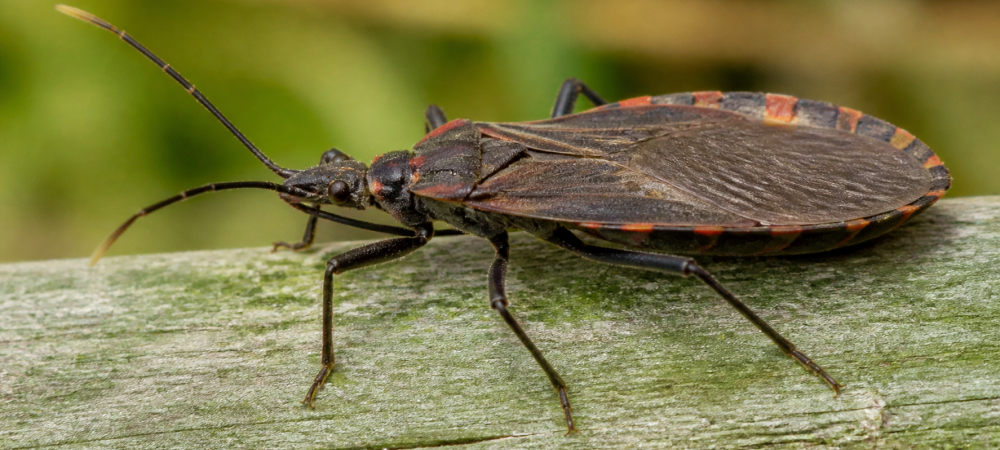
Kissing bugs are blood-feeding insects in the triatomine group, a type of assassin bug found primarily in warmer parts of the Americas. They get their name from their tendency to bite exposed skin while people or animals are resting, sometimes around the face or mouth.
While kissing bugs are known for their association with Chagas disease, simply finding or being bitten by one does not mean you have been infected. Knowing what these insects look like, where they live, and how their bites may appear can help with identification.
What Do Kissing Bugs Look Like?
Kissing bugs are typically dark brown or black with elongated, somewhat flattened bodies. Many species have orange, red, or yellow markings along the outer edges of the abdomen.
Common identifying features include:
- A long, narrow head
- Six slender legs
- Long antennae
- A pointed mouthpart used for feeding
- Wings that lie flat across the back in adults
- Contrasting markings along the sides of the abdomen
Kissing bugs can be confused with other insects, including certain assassin bugs, leaf-footed bugs, and stink bugs. Because several insects share similar coloring and body shapes, identification should be based on multiple features rather than color alone.
How Big Is a Kissing Bug?
Kissing bug size varies by species, but adults are generally about half an inch to slightly more than an inch long.
Their elongated bodies and long legs can make them appear larger at first glance. Young kissing bugs, called nymphs, are smaller and do not yet have fully developed wings.
Do Kissing Bugs Bite?
Yes. Kissing bugs bite people and animals because they feed on blood. They are primarily active at night and may emerge from hiding places while a person or animal is resting.
Despite their name, kissing bugs do not only bite around the mouth. They can feed on other exposed areas of skin as well.
The bite itself is not typically how Chagas disease is transmitted. The disease is caused by the parasite Trypanosoma cruzi, which an infected kissing bug may pass in its feces after feeding. Infection can occur if contaminated material enters the bite, another break in the skin, the eyes, or the mouth.
What Does a Kissing Bug Bite Look Like?
A kissing bug bite may appear as a small red or swollen area on the skin, but there is no single kissing bug bite mark that reliably identifies the insect responsible.
Possible reactions include:
- Redness
- Mild swelling
- Itching
- A small raised bump
- Local irritation
These symptoms can also occur after bites from mosquitoes, fleas, bed bugs, and other insects, so a kissing bug bite mark alone is usually not enough to confirm the cause.
Where Do Kissing Bugs Live?
Kissing bugs usually live in sheltered areas where animals are nearby and can serve as blood hosts. In the United States, they are found mainly across southern parts of the country.
Common outdoor hiding places include:
- Wood and brush piles
- Beneath tree bark
- Rock piles
- Animal burrows and rodent nests
- Areas beneath porches
- Outdoor kennels and dog houses
- Chicken coops
Kissing bugs may also enter buildings through cracks, gaps, damaged screens, or other exterior openings. Once indoors, they may hide in protected areas during the day and become active at night.
Are There Kissing Bugs in SC?
Yes, kissing bugs have been documented in South Carolina. Multiple species occur across parts of the southeastern United States, including species associated with South Carolina.
That does not mean kissing bugs are commonly found inside homes. In the United States, household transmission of Chagas disease is much less common than in some areas of Latin America.
South Carolina homeowners may still encounter kissing bugs outdoors or occasionally find one that has entered a structure, particularly in areas with nearby wildlife, rodents, or outdoor animal shelters.
How to Reduce Kissing Bugs Around Your Home
Reducing hiding places and sealing potential entry points can make a property less accessible to kissing bugs.
Helpful steps include:
- Seal cracks and gaps around windows, doors, foundations, and utility openings
- Repair damaged window and door screens
- Keep wood piles and heavy debris away from the home
- Address rodent nests and other animal activity near the structure
- Keep outdoor pet sleeping areas clean and maintained
These steps can also help reduce many other insects that use similar hiding places.